William L. Dawson (1899–1990) was one of America’s most gifted and groundbreaking composers, conductors and educators.
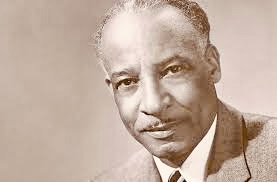
Born in Anniston, Alabama, Dawson rose to international prominence through his masterful arrangements of African American spirituals and original works that blended classical traditions with the rhythms and soul of Black life.
At the age of 13, Dawson ran away from home after hearing Booker T. Washington speak, determined to study at Tuskegee Institute. He worked his way through school, learning to play multiple instruments, beginning with the trombone. His musical journey later led him to the Horner Institute of Fine Arts in Kansas City and the American Conservatory of Music in Chicago, where he honed the skills that would place him among the most significant composers of his generation.
Dawson’s Negro Folk Symphony marked a defining moment in American music. Premiered in 1934 by Leopold Stokowski and the Philadelphia Orchestra, the symphony was hailed as a groundbreaking achievement – a bold assertion that the themes and spirituals of Black America belonged on the concert stage.
Though it never achieved the widespread recognition it merited, critics praised its originality. After a transformative trip to West Africa in the early 1950s, Dawson revised the work, weaving in African rhythms and tonalities, deepening its cultural resonance.
From 1931 to 1956, Dawson served as the Director of Music at Tuskegee Institute, where he built the Tuskegee Choir into an internationally acclaimed ensemble. Under his direction, the choir performed for presidents, foreign dignitaries and packed concert halls, becoming one of the most powerful cultural ambassadors of the American South. Under his direction, the Tuskegee Choir traveled extensively and performed in residence with the National Broadcasting Company, at Carnegie Hall and for the opening of Radio City Music Hall.
Following his retirement from Tuskegee, Dawson continued to share his gifts on the world stage. As a music ambassador with the U.S. State Department, he took the power of African American spirituals and choral traditions to international audiences. He remained a sought-after workshop leader, mentoring countless conductors and choristers and actively managing his musical catalog.
Today, Dawson’s influence endures. His musical legacy lives on in his choral arrangements. Beloved spirituals, like “Behold the Star”, are still taught to new generations of students, and his symphony is experiencing a resurgence with orchestras across the country.
William Levi Dawson’s work reminds us that music can both preserve the soul of a people and light the path forward.
 Historic Dawson House